2012 – 2021
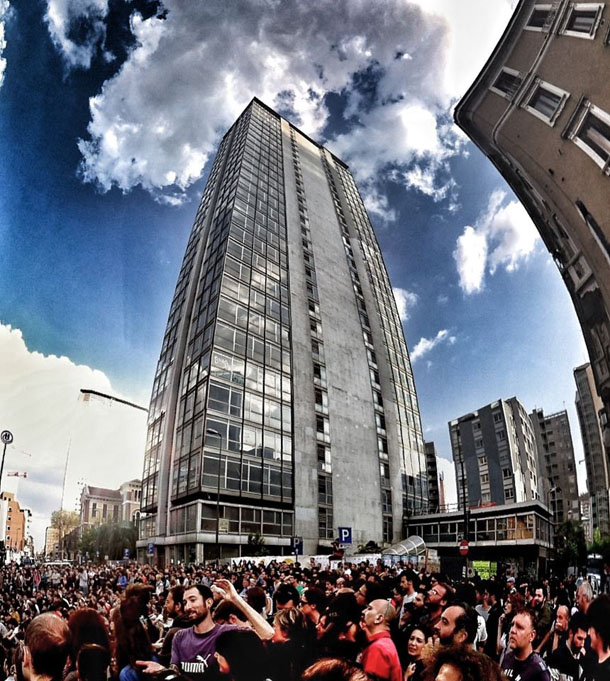
Sabato 5 maggio 2012 un centinaio di lavoratori dell’arte, fra cui anche la maggior parte degli artisti e curatori di Isola Art Center, si riunisce all’Isola per poi spostarsi verso via Pola, passare accanto al nuovo grattacielo della Regione Lombardia, costruito sul Bosco di Gioia, e raggiungere la torre Galfa.
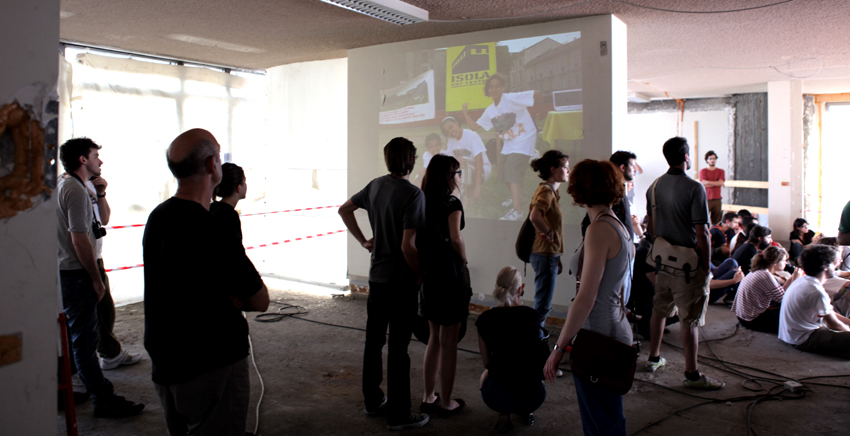
La torre è vuota da quindici anni, bloccata dalla speculazione immobiliare, ed è di proprietà del Gruppo Ligresti, che insieme a Hines è il principale responsabile delle edificazioni sull’area Isola, Garibaldi-Repubblica e Varesine. Qui i Lavoratori dell’Arte danno vita a Macao. Nuovo centro per le arti, la cultura e la ricerca di Milano. In una settimana migliaia di persone entrano nell’edificio partecipando ad assemblee e tavoli di lavoro.
L’opinione pubblica esprime una simpatia generale verso questa iniziativa inaspettata. In un comunicato stampa del 15 maggio 2012 gli impiegati della Regione Lombardia, uniti nella Rappresentanza Sindacale Unitaria, riassumono i fatti e prendono una posizione:
Lo spazio di Macao, aperto da qualche giorno nel grattacielo Galfa di Milano, stabile per uffici abbandonato da 15 anni, è diventato in breve tempo un luogo di produzione di cultura frequentato da migliaia di giovani e guardato con interesse dagli abitanti di un quartiere che si sente ancora “orfano” del polmone di idee costituito da Isola Art Center, schiacciato poi dalla speculazione immobiliare. Speculazione che, in pochi giorni, ha ottenuto dalle autorità l’ordine di sgombero di Macao. L’RSU della Giunta Regionale della Lombardia all’unanimità (con 5 astenuti) esprime la propria solidarietà alle ragazze e ai ragazzi di Macao e auspica che si trovi al più presto una soluzione che consenta la continuazione di questa esperienza, importante per la città di Milano.
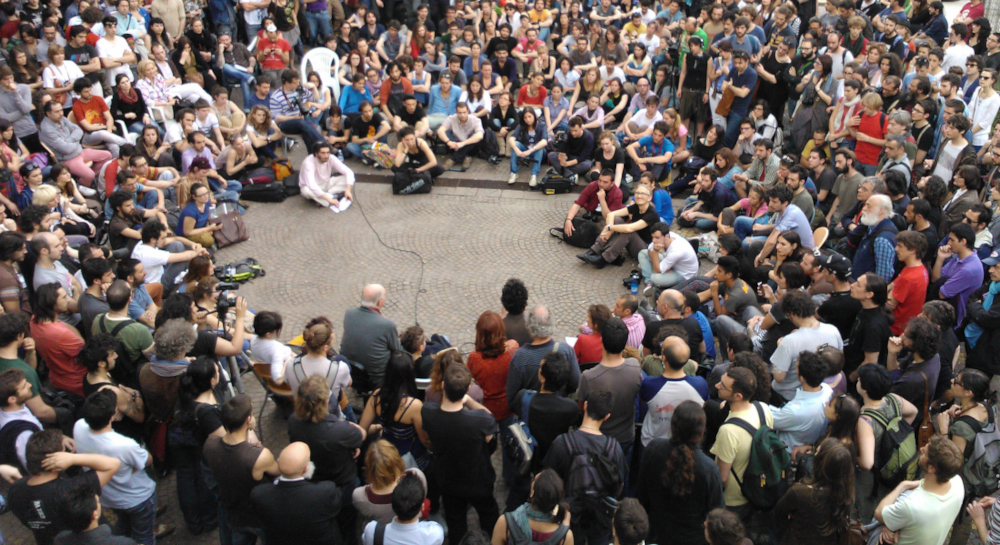
Questo comunicato viene letto da una delegata dei lavoratori della Regione in un’assemblea di centinaia di persone che, dopo lo sgombero dalla Torre Galfa, stanno occupando e bloccando il traffico della strada antistante il grattacielo, ribattezzata “Piazza Macao”. L’attività iniziata all’interno della torre continua per strada: riunioni, lezioni universitarie, concerti, performance, produzione di un palco mobile… L’affluenza quotidiana non diminuisce ma aumenta e per un concerto gratuito di cento giovani musicisti del conservatorio, la strada-piazza arriva ad accogliere circa diecimila persone.
Fra la “liberazione” della torre e la fondazione della piazza, Macao riesce in breve tempo a diventare il luogo di speranza, di incontro e di espressione di molte realtà frammentate di Milano. Si intuisce il significato del termine “Diritto alla città” e, per un attimo, s’intravede cosa potrebbe succedere se l’esperienza fosse generalizzata, estesa a tutto il territorio. Un’altra città, un’altra politica, un’altra cultura, un’altra vita.
On Saturday 5 May 2012 a hundred “Art Workers”, including many of the artists and curators of Isola Art Center, gathered in Isola and then walked down via Pola, passing by the tower of the Lombardy Region built on the Bosco di Gioia, to reach the Galfa skyscraper.
The tower had been empty for fifteen years for reasons of speculation, and is owned by the Ligresti Group, which together with Hines is the main force behind the construction in the Isola, Garibaldi-Repubblica and Varesine areas. Here the “Art Workers” open Macao, a new center for the arts, culture and research in Milan. In one week thousands of persons entered the building, participating in assemblies and work tables.
Public opinion was generally quite in favor of the unexpected but short-lived initiative. In a press release on 15 May 2012, the employees working in the Lombardy Region tower, together with the Rappresentanza Sindacale Unitaria (RSU, unitary workplace union structure), summed up the facts and took a position:
The space of Macao, opened a few days ago in the Galfa skyscraper in Milan, an office building that has been abandoned for 15 years, has quickly become a place of cultural production, frequented by thousands of young people and observed with interest by the inhabitants of a neighborhood that still feels as if it has been deprived of the reservoir of ideas that was Isola Art Center, and crushed by real estate speculation. The same forces of speculation that in just a few days have obtained, from the authorities, the eviction and closing of Macao. The RSU of the Regional Government of Lombardy unanimously (with 5 abstentions) expresses its solidarity with the young women and young men of Macao, in the hope that a solution will be found as soon as possible to permit the continuation of this important experience for the city of Milan.
This press release was read by a delegate of the workers of the Region in an assembly of hundreds of people who after the eviction remained in the street in front of the skyscraper, blocking traffic and creating what was known as Piazza Macao. The activity that had begun inside the tower continued in the street: meetings, university lectures, concerts, performances, production of a mobile stage… The daily arrival of visitors did not decrease, but even increased, and for a free concert by a hundred young musicians the crowd in the street swelled, containing about 10,000 persons.
With the “liberation” of the tower and the creation of the piazza, Macao managed in a short time to become the place of hope, of encounter and expression of many fragmentary realities of the urban territory. An idea took form of what the Right to the city means, and for a moment people caught a glimpse of what could happen were the experience to spread in a general way across the whole territory. Another city, another politics, another culture, another life.